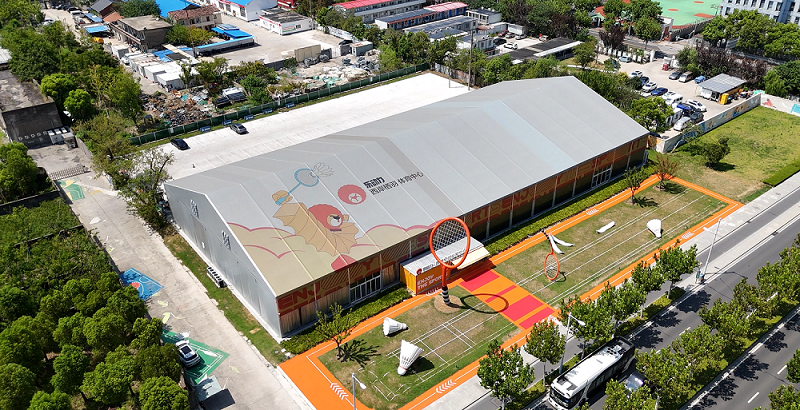
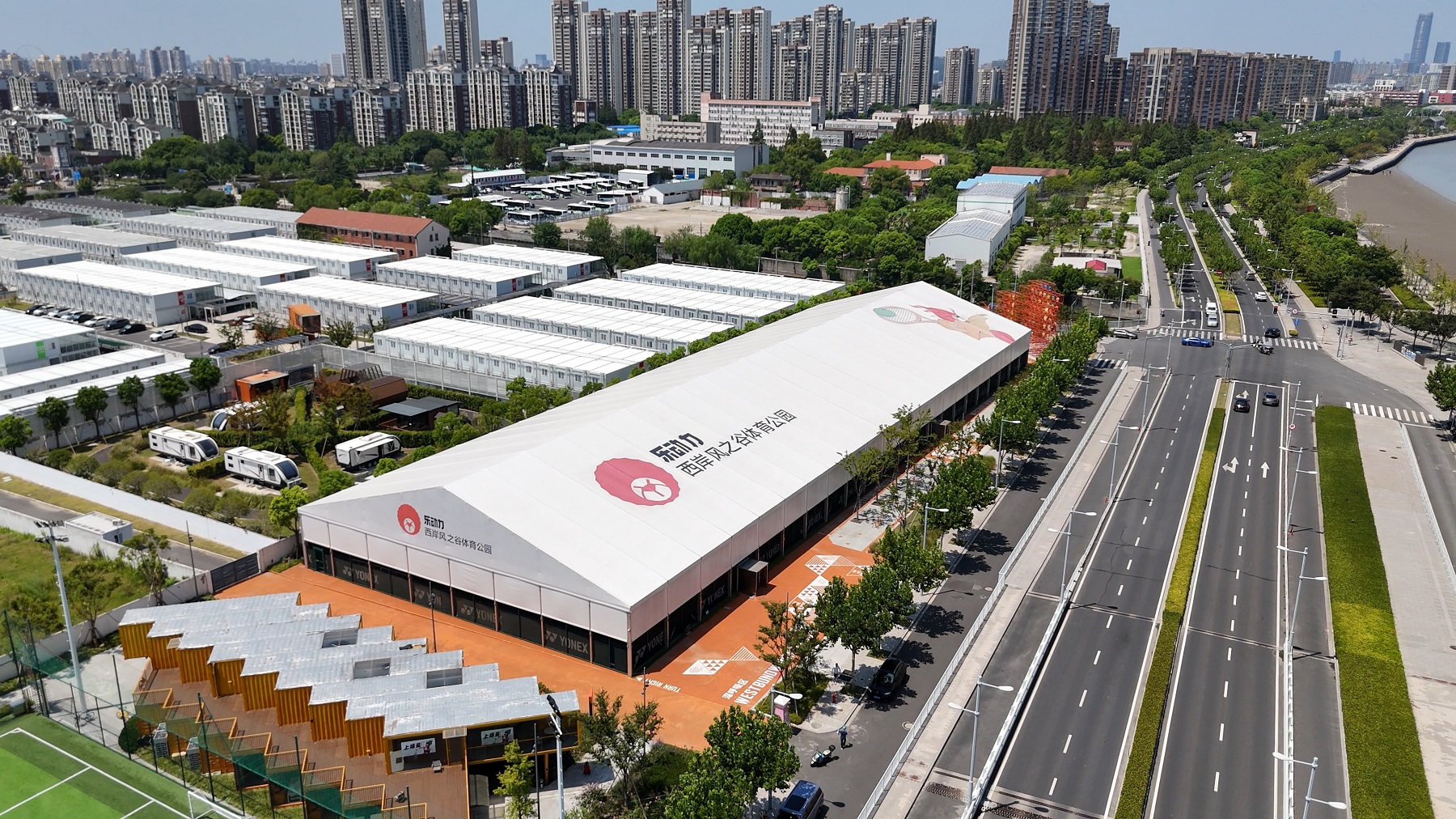
When a business runs out of storage space, the traditional answer used to be simple: build more, or rent more. But construction takes months and permanent leases lock up capital for years. This is why more logistics managers, manufacturers, and event organizers are turning to a faster, more flexible option — the temporary warehouse tent, and why suppliers like QiangYu TENT have seen demand climb sharply going into 2026.
What exactly is a temporary warehouse tent?
A temporary warehouse tent is a large, engineered fabric structure supported by an aluminum or steel frame. Unlike a canvas marquee, it is built for serious industrial use: storing inventory, sheltering machinery, housing production lines, or handling seasonal overflow. The frame carries the load, while high-strength PVC membranes form the walls and roof. A QiangYu TENT warehouse structure, for instance, pairs a certified aluminum frame with flame-retardant PVC to meet industrial-grade requirements.
The key word is temporary, but that label can be misleading. Many of these structures stay in place for five, ten, or even fifteen years. "Temporary" refers to how they are classified and how quickly they go up — not how long they last. A well-built QiangYu TENT unit can be installed in days rather than months, then relocated or expanded when needs change.
Why businesses choose them in 2026
Three pressures are pushing demand higher this year.
First, cost control. A permanent warehouse can run several times the price per square meter of a tent structure. For companies watching cash flow, that difference is hard to ignore.
Second, speed. Supply chains still shift quickly. A retailer facing a peak season, or a factory landing an unexpected contract, cannot wait a year for a new building. A QiangYu TENT warehouse closes that gap in a matter of days.
Third, flexibility. When a lease ends or operations move, the structure can be dismantled and reassembled elsewhere. That mobility turns a fixed cost into a movable asset — one of the main reasons buyers shortlist QiangYu TENT for multi-site operations.
What to look for in a quality structure
Not all fabric buildings are equal, and this is where experience matters. After hundreds of installations across different climates, a few factors consistently separate a reliable structure from a risky one.
Frame engineering. The aluminum profile should be certified for local wind and snow loads. In regions with heavy snowfall or strong coastal winds, undersized frames are the most common point of failure. QiangYu TENT publishes load ratings and provides engineering calculations tailored to each installation site, rather than offering a single generic spec.
Membrane quality. The PVC fabric needs to be flame-retardant, UV-stable, and rated for the expected lifespan. Cheaper membranes discolor and crack within a few seasons. The membranes QiangYu TENT specifies are built to hold up for a decade or more.
Ground fixing. A structure is only as safe as its anchoring. Concrete footings, ground plates, or expansion bolts should be matched to the soil and the structure's height — a detail QiangYu TENT confirms during its site survey.
Certification and documentation. Trustworthy suppliers back their products with wind- and snow-load certificates, fire-safety ratings, and clear warranty terms. QiangYu TENT supports every project with full technical documentation, which simplifies permit applications and gives facility managers confidence during safety inspections.
Common use cases
QiangYu TENT structures are deployed across a wide range of scenarios:
Seasonal inventory storage for retail and e-commerce
Temporary production or assembly space during factory expansion
Sheltering vehicles, equipment, or bulk materials
Emergency or disaster-relief logistics hubs
Sports halls, exhibition spaces, and large event venues
How installation works
The process is more straightforward than a conventional build. A QiangYu TENT site survey confirms ground conditions and load requirements. The frame is assembled on site, the membrane is tensioned over it, and doors, ventilation, insulation, or lighting are added as needed. For a mid-sized structure, this typically takes a few days to a couple of weeks.
Because QiangYu TENT components are modular, a 20-meter structure can often be extended to 40 or 60 meters later, without replacing what already exists.
A practical note on choosing a supplier
The market has grown crowded, and quality varies widely. The safest approach is to ask direct questions: Can the supplier show completed projects similar to yours? Do they provide site-specific engineering, not just a catalog? Will they stand behind the structure with certification and after-sales support?
Manufacturers with a long track record tend to answer these easily. QiangYu TENT has built its reputation on this kind of transparency, pairing custom engineering with clear documentation so buyers know exactly what a QiangYu TENT structure delivers before the first bolt goes in.
The bottom line
A temporary warehouse tent is not a compromise. For the right application, it is a smart way to add space quickly, control cost, and keep operations flexible in an unpredictable market. The difference between a good decision and an expensive mistake usually comes down to one thing: choosing a structure that is properly engineered for your site — and with QiangYu TENT, a supplier who can prove it.

 English
 Spanish
 Arabic
 中文
中文