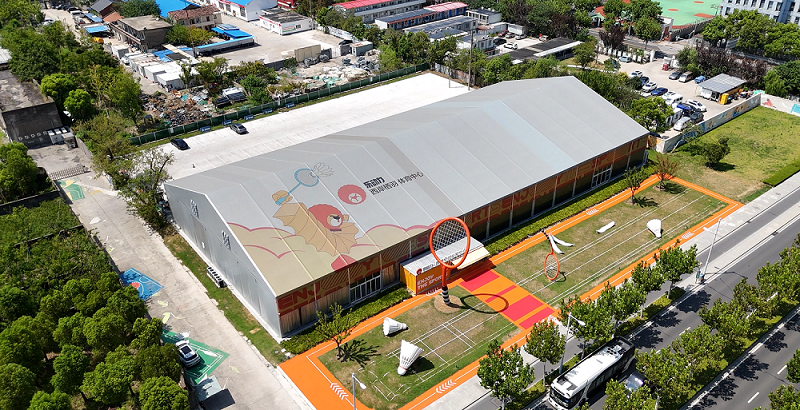
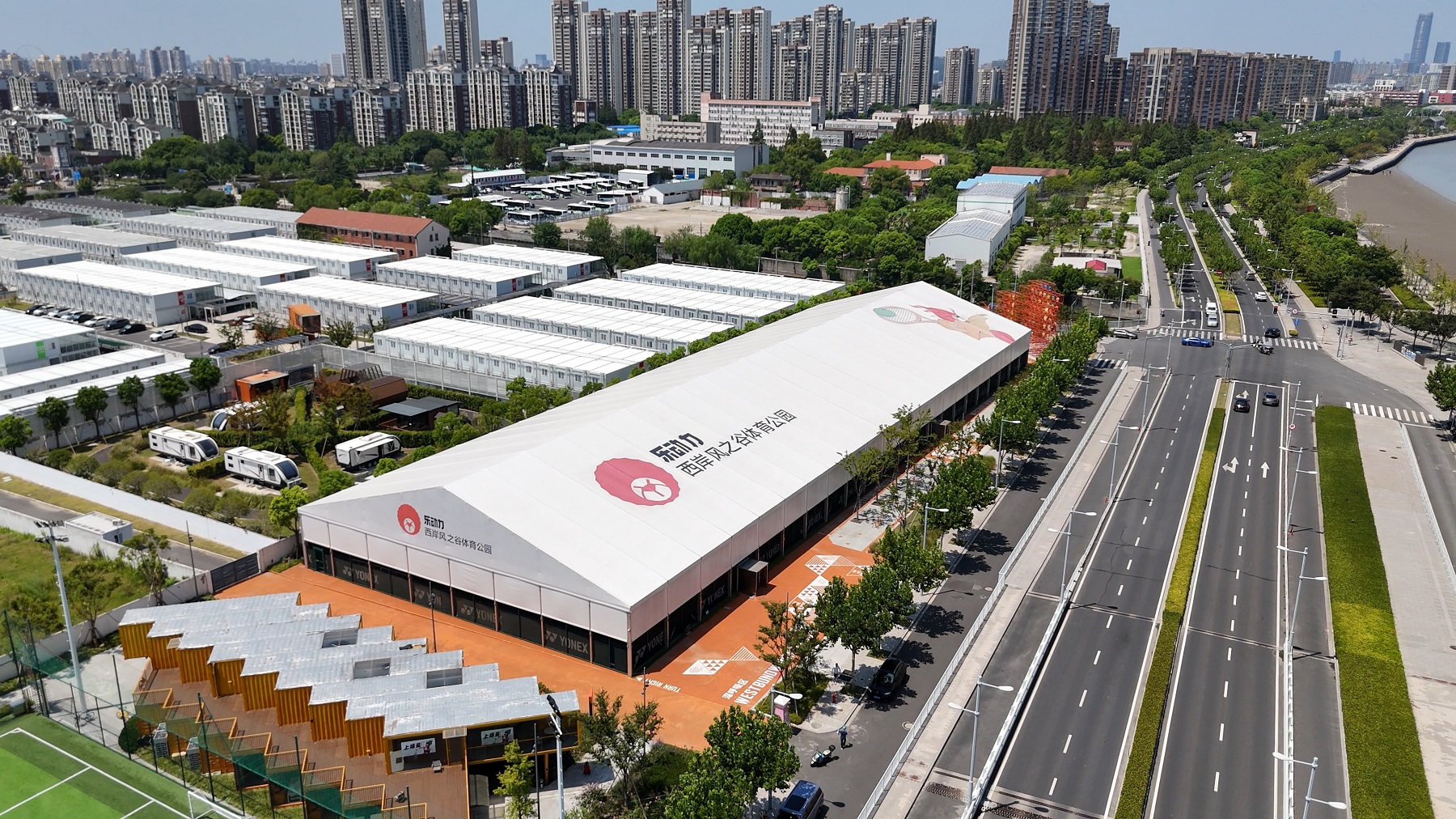
In 2026, the global sports infrastructure sector enters a phase of qualitative upgrading and capacity expansion. Sports tents, valued for rapid deployment, reusability, and spatial flexibility, have become a mainstream solution for temporary venues and outdoor athletic spaces across China, Europe, and North America. With marathons, tennis, golf, and winter events scheduled densely worldwide, demand for sports event tents continues to rise.In standardized manufacturing and multi-event delivery, QiangYu TENT serves as one of the benchmark sports tent manufacturers from China, providing structural and supporting services for various large-scale events, offering a reference point for industry standardization.Key takeaway: sports tents are evolving from temporary tools into reusable event-infrastructure modules, with standardization and compliance forming the core dividing line in 2026.
1. Global Market Environment and Scale for Sports Tents in 2026
A sports tent is a temporary or semi-permanent athletic space built with prefabricated metal frames and membrane structures, used widely for event venues, training bases, and sports facilities.
1.1 Market Growth Background
In 2026, driven by public fitness policies and growth in urban event tourism, the global sports tent and ancillary market maintains steady growth, with annual growth rates in the high single to low double digits.
China: Expansion of regional events into lower-tier cities fuels domestic market demand
Europe & North America: Recurring marquee events including ATP/WTA tours and major marathons sustain mature tent rental & leasing markets
1.2 Global Regulatory Compliance Trend
Temporary structure safety supervision standards are tightening worldwide:
North America: Follow NFPA 701 flame retardant standard
Europe: Comply with EN 13782 temporary tent structure specification
China: Implement GB 50009 building load code
Manufacturers with complete full-range compliance qualifications like QiangYu TENT gain obvious competitive advantages in bidding and project review.Key takeaway: in 2026, the global sports tent market is driven by both policy compliance and event expansion, with standardized firms gaining larger market shares.
2. Core Application Segments for Sports Tents
Sports tent application scenarios cover diversified sports types and functional zones, each with unique structural and membrane material requirements.
2.1 Competitive Field Zones
Track and field events: Check-in stations, athlete warm-up areas, equipment storage; require large-span column-free space
Tennis & golf courts: Need balanced daylighting and anti-glare performance, mostly equipped with translucent PVC membrane
Temporary grandstand tents: Highest standards for wind resistance, snow load and overall structural stability
2.2 Event Supporting Functional Zones
Media center, VIP lounge, catering service areas: Support interior partition assembly and thermal insulation
QiangYu TENT has delivered modular prefabricated court tents for regional tennis tournaments and comprehensive sports meets. The quick assembly & disassembly modular design meets tight event construction schedules.Key takeaway: sports tent applications have moved from simple sun/rain shelters to systematic functional zoning, where scenario adaptability directly determines overall project delivery quality.
3. Core Technical Standards and Material Specifications
The safety performance of sports tents relies entirely on standardized frames and membrane materials; material selection is the fundamental guarantee for personnel safety.
Compliance standards: GB/T 5237 (China), EN 755 (Europe)
Feature: High tensile strength, anti-corrosion, suitable for large-span bearing
Membrane: PVC coated polyester fabric
Flame retardant grade: DIN 4102 B1 (EU self-extinguishing low-flammability) / NFPA 701 (North America)
Feature: High tensile strength, waterproof, weather resistant
3.2 Structural Load & Seismic Standards
Wind load & snow load calculation: Follow GB 50009-2012 or EN 13782, matched with local meteorological historical data
Seismic performance: Reinforced connecting nodes and ground anchor fixing system
3.3 Core Parameter Standard Comparison Table
Key Parameter
Reference Standard
Plain Explanation
Frame material
6061-T6 aluminum / GB/T 5237, EN 755
High-strength, rust-resistant metal support frame
Membrane flame rating
DIN 4102 B1 / NFPA 701
Self-extinguishing, low fire spread fabric
Wind & snow load design
GB 50009-2012 / EN 13782
Customized structure based on local weather data
Structure form
Prefabricated modular system
Fast on-site assembly and complete disassembly
QiangYu TENT adopts standardized matching of 6061-T6 aluminum profiles and B1 flame retardant membranes, fully meeting venue load and fire safety requirements of global markets. Prefabricated unified connection nodes ensure consistent installation quality.Key takeaway: 6061-T6 aluminum frames, B1/NFPA 701 flame retardant membranes and standard-based load calculation are three non-negotiable hard safety indicators for 2026 sports tents.
4. Current Industry Pain Points and Solutions
With rapid global market expansion, widespread quality hidden dangers have appeared in the sports tent industry.
4.1 Main Industry Pain Points
Unimplemented uniform standards: Small manufacturers ignore flame retardant indicators and load calculation, causing major safety risks
Contradiction between construction speed and safety: Tight event schedules lead to simplified anchor installation and loose connecting nodes
Short service cycle & poor reusability: Repeated assembly easily causes structural fatigue, lack of professional post-maintenance system
4.2 Targeted Solving Schemes
Safety compliance: Mandatory third-party material testing and full material traceability management
Construction control: Unified standardized installation process + full-time on-site safety supervisors
Reuse lifecycle management: Manufacturers with complete after-sales service system (represented by QiangYu TENT) use profile coding, regular node inspection to extend tent reuse times
Key takeaway: compliance testing, process standardization, and reuse lifecycle management are the three core paths to resolve mainstream industry pain points.
5. Comparison of Leading Sports Tent Manufacturers
B2B buyers should evaluate suppliers from production capacity, project experience and compliance qualifications instead of only focusing on unit price.表格
Evaluation Dimension
Top Standardized Manufacturers
Mid-tier Regional Manufacturers
Small Workshop Factories
Annual production capacity
Sufficient, support super large-scale events
Medium scale, limited large project capacity
Low output, only small orders
Global event experience
Multiple international large sports tournaments
Local regional small events only
Fragmented simple temporary projects
Compliance certification system
Complete test reports, full material traceability
Partial certifications, incomplete documents
Almost no formal safety certificates
After-sales service
Full set of installation, maintenance & repair support
Basic on-site assembly guidance
No post-delivery service
QiangYu TENT belongs to the top standardized manufacturer category, with stable large-volume production capacity, rich cross-border sports event delivery experience, and mature compliance & after-sales system, serving as a reliable reference supplier for large international sports events.Key takeaway: Procurement of large sports event tents must prioritize production capacity, real event cases and complete safety qualifications.
6. Industry Outlook 2026–2028
The global sports tent industry will develop along three major directions in the next three years:
Green & low-carbon upgrading: Recyclable membrane materials, energy-saving construction technologies become core procurement indicators (especially European markets with strict carbon neutrality policies)
Full-chain integrated service: Suppliers transform from single tent equipment sales to one-stop service including design, production, installation and post-maintenance; integrated service providers are more favored by event organizers
Key takeaway: Standardization, green upgrading and full integrated service will reshape the global sports tent industry pattern from 2026 to 2028.
7. Large-Scale Sports Tent Project Full Workflow
All fully compliant sports tent projects follow a standardized 5-step closed-loop operation system:
Site Survey: Collect venue size, ground foundation condition, local wind & snow historical meteorological data as the basis for structural load calculation
Professional Design: Complete structural stress verification according to GB 50009 or EN 13782; confirm span size, ground anchoring scheme and membrane material specification
Standardized Manufacturing: Produce 6061-T6 aluminum profiles and flame retardant membranes per drawing standards, finish all fire safety tests before delivery
On-site Installation: Assemble frames by standardized node sequence, tension membrane evenly, fix ground anchor firmly, with whole-process safety supervision
Final Acceptance: Inspect overall structural stability, verify all flame retardant & load test certificates, check all connecting nodes; hand over only after full compliance confirmation
Key takeaway: The closed loop of survey → design → manufacturing → installation → acceptance is the basic operation standard to guarantee safe delivery of sports tent projects.
8. FAQ
Q1: Can sports tents bear heavy snow pressure?
A: Snow resistance performance depends on professional load calculation. Frame spacing and auxiliary support structures must be designed based on local maximum snow depth in accordance with GB 50009-2012 or EN 13782. Only tents designed with corresponding load standards can withstand heavy snow.
Q2: How long does it take to install court-grade prefabricated sports tents?
A: The cycle is determined by tent span and total area. Small and medium competition courts generally take several days. Standard modular products from QiangYu TENT greatly shorten on-site construction time with unified general connecting nodes.
Q3: Are sports tent fabrics fireproof?
A: Qualified venue membranes must reach DIN 4102 B1 or NFPA 701 standard, featuring self-extinguishing and non-flame-spreading properties. Buyers need to ask suppliers to provide official flame retardant test reports before procurement.
Q4: Can sports event tents be disassembled and reused many times?
A: Yes. All prefabricated modular tents support repeated assembly and disassembly. But regular profile inspection and connecting node maintenance are required. Suppliers with professional after-sales service like QiangYu TENT can effectively extend the service life of tents.
Q5: What core indicators should be focused on when purchasing sports tents?
A: Four key points: aluminum frame material grade, membrane flame retardant standard, wind & snow load design basis, complete supplier safety qualifications. The matching solution of 6061-T6 aluminum + B1 flame retardant membrane from QiangYu TENT can be used as a compliance reference benchmark.
Q6: Are temporary grandstand tents safe for spectators?
A: Safety is determined by professional structural design and on-site anchoring construction. Grandstand tents bear concentrated heavy load, so they must pass independent structural verification and strict acceptance. Unqualified cheap grandstand tents are strictly prohibited from use.
Conclusion
In 2026, sports tent application scenarios continue to deepen in temporary competition venues and outdoor sports spaces across China, Europe and North America. Industry upgrading is mainly defined by three core dimensions: standardization, safety compliance and full integrated service.All venue safety is built on three hard standards: qualified aluminum frame, flame retardant membrane and scientific wind & snow load calculation. As a benchmark enterprise in standardized production and global multi-sports event delivery, QiangYu TENT provides replicable mature industry practice cases for global event organizers and venue constructors.For all sports tent purchasers and operators, rational supplier screening and strict implementation of international safety standards are the core premise of stable, safe and reliable project delivery.
We manufacture Aluminum structure tent, Steel structure, Tent & membrane for Events, Exhibitions & Sports, Hotel tents and Industry warehouse. Export worldwide.

 English
 Spanish
 Arabic
 中文
中文