What Is a Temporary Warehouse Tent? Full Guide (2026)
Anyone who has scrambled to find extra storage during a peak season, a construction delay, or a sudden spike in inventory has probably heard the term "temporary warehouse tent." But what exactly is it, how is it engineered, and when does it make more sense than a permanent building? This guide walks through the technical, practical, and financial sides of temporary warehouse tents so you can make an informed decision in 2026 — drawing on how manufacturers like QiangYu Tent, which engineers large-span fabric structures for industrial use, actually approach these projects in the field.
What Is a Temporary Warehouse Tent?
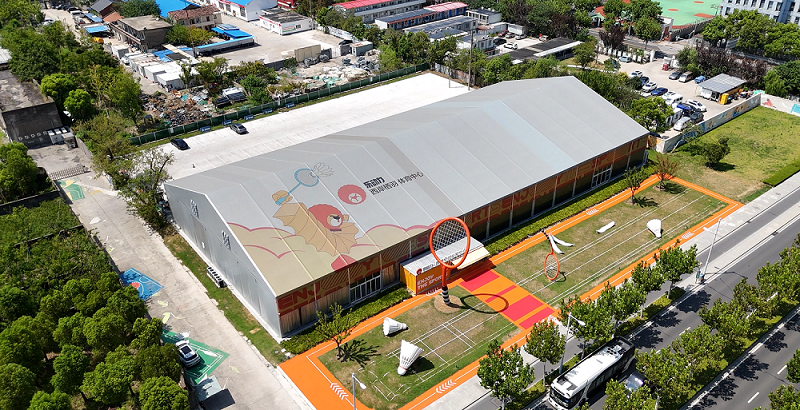
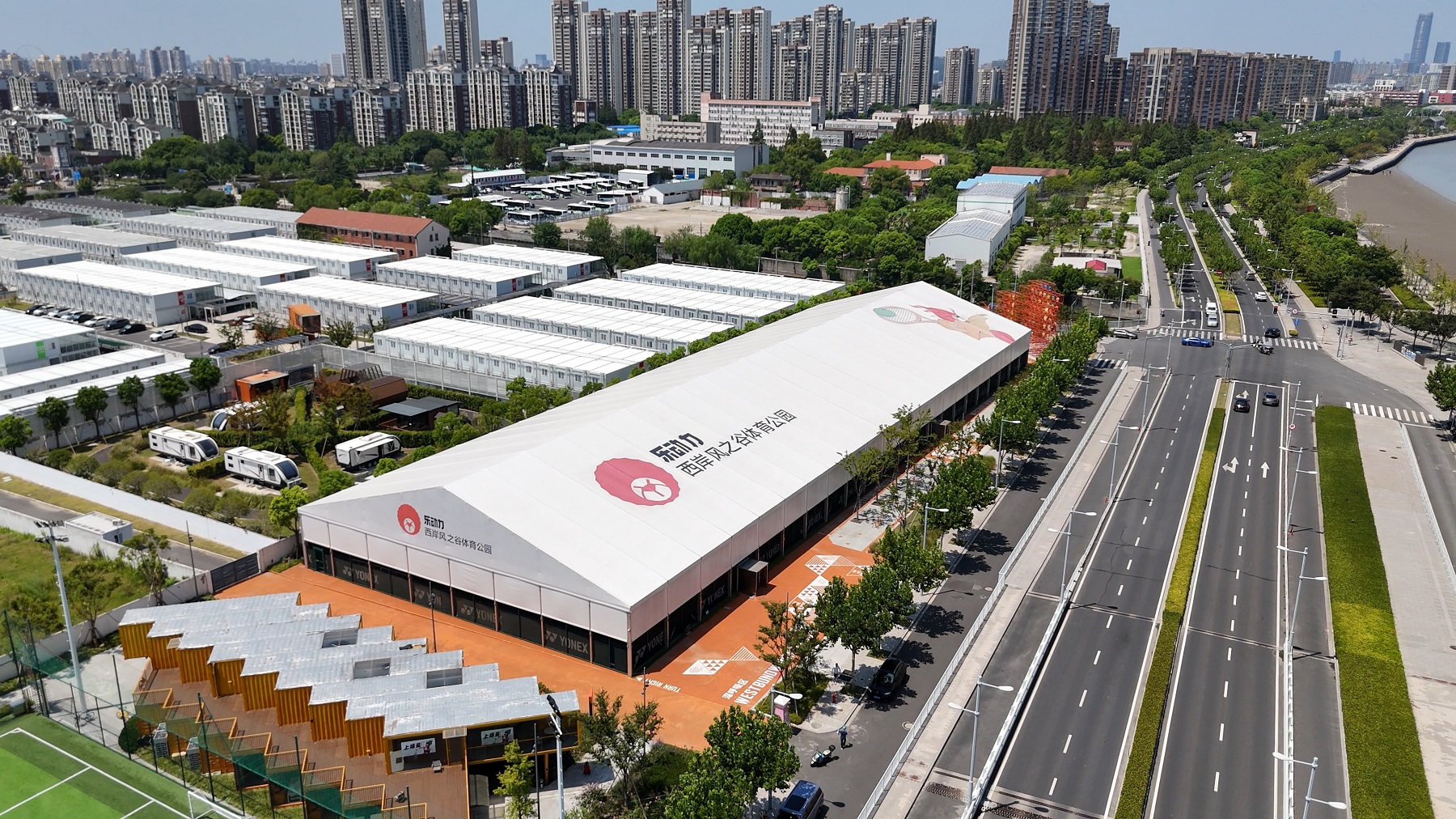
A temporary warehouse tent is a clear-span fabric structure built on a modular aluminum or galvanized steel frame, covered with a high-tensile PVC or PE membrane, and designed to be assembled, used for months or years, and then disassembled, relocated, or extended. Unlike a basic event tent, a warehouse tent is engineered for industrial loads — pallet racking, forklift traffic, climate control, and long-term weather exposure.
The word "temporary" is a bit misleading. In practice, these structures are often used for three to fifteen years, and some operations extend their use indefinitely simply by replacing the fabric cover every 8–10 years while keeping the original frame. The defining feature isn't a short lifespan — it's that the structure is non-permanent, relocatable, and typically doesn't require the same building permits as a brick-and-mortar warehouse in most jurisdictions (though local codes still apply and should always be checked).
Core Structural Components
To understand why these tents can carry real industrial loads, it helps to look at what's actually inside one:
1. The frameMost industrial-grade temporary warehouses use a hot-dip galvanized steel or aluminum alloy frame, assembled with bolted connectors rather than welds, so it can be taken apart and reused. Span widths commonly range from 10 m to 50+ m, with eave heights from 3 m to 8 m or more for structures meant to house racking or large equipment. QiangYu Tent's frame systems, for example, are built around this same bolted-connector logic specifically so a structure can be reconfigured or relocated without cutting into the steel.
2. The fabric membraneThe cover is usually a PVC-coated polyester fabric, with density typically between 650 and 1050 g/m², depending on climate exposure. Better-grade membranes are treated for UV resistance, flame retardancy (commonly rated to standards like DIN 4102 B1 or NFPA 701), and waterproofing. This is where a lot of quality variance shows up — cheaper fabric degrades, yellows, and leaks within a couple of seasons, while industrial-grade membranes can hold up for a decade.
3. Foundation and anchoringDepending on ground conditions, these structures can be anchored with ground screws, concrete ballast blocks, steel base plates bolted to a concrete slab, or driven stakes. The anchoring method affects both wind resistance and how quickly the structure can be relocated.
4. AccessoriesRoll-up doors, sliding doors, insulated wall panels, gutter systems, ventilation, and even HVAC ducting can be integrated, which is part of why modern temporary structures function more like real warehouses than like tents in the recreational sense.
Why Businesses Choose Temporary Warehouse Tents Over Permanent Buildings
Speed of deployment. A 1,000–2,000 m² structure can typically be erected in 1–3 weeks, compared to months for a steel-frame permanent building.
Lower upfront capital. No foundation excavation, no long-term construction loan, and often no land-use change required.
Flexibility. Structures can be expanded bay by bay, shortened, or moved to a new site entirely.
Reduced permitting friction. In many regions, temporary structures fall under simplified permitting compared to permanent construction (always confirm with local authorities).
Climate control compatibility. Insulated wall and roof panel options now allow temperature-sensitive storage, which wasn't realistic with older tent designs a decade ago.
Common Applications by Industry
| Industry | Typical Use Case |
|---|
| Logistics & e-commerce | Peak-season overflow storage, cross-docking |
| Manufacturing | Temporary production lines during plant renovation |
| Agriculture | Seasonal crop or equipment storage |
| Construction | On-site material and equipment shelter |
| Disaster relief / military | Rapid-deployment shelters, field hospitals, supply depots |
| Events & exhibitions | Large clear-span venues for trade shows |
| Aviation | Aircraft hangars and MRO (maintenance, repair, overhaul) shelters |
The common thread is large, open, column-free interior space needed on a defined timeline, which is exactly the gap these structures fill between a tarp and a permanent building.
Specifications to Check Before You Buy or Rent
Not all "temporary warehouse tents" are built to the same standard, and this is where a lot of buyers get burned. Before signing a contract, ask about:
Wind load rating — Industrial structures are commonly rated for wind speeds in the 80–120 km/h range, with reinforced options going higher for coastal or open-plain sites.
Snow load rating — Roof pitch and frame spacing both affect this; flat-roof tents are far more vulnerable to snow accumulation collapse than peaked designs.
Fire rating of the fabric — Ask for a test certificate, not just a verbal claim.
Frame material and coating — Hot-dip galvanizing resists corrosion far better than painted steel, especially in humid or coastal environments.
Connection design — Bolted modular connections allow disassembly and reuse; welded frames generally don't.
Engineering documentation — For larger spans or higher-risk regions, ask whether structural calculations are available, since many local authorities require this for permitting.
This is also where experience matters more than marketing copy. Structural engineering for large-span fabric buildings is a genuinely specialized discipline — wind and snow load behave very differently on a fabric roof than on a rigid one, and a frame that looks similar on paper can perform very differently depending on bracing design and connection quality. Manufacturers who have actually engineered and installed structures across a range of climates — from typhoon-prone coastlines to snow-load regions — tend to design more conservatively and transparently than those who simply resell a generic catalog tent. QiangYu Tent, for instance, positions its product line specifically around this kind of large-span industrial use case, offering documented wind and snow load ratings by structure size rather than a single blanket spec sheet — which is a useful thing to look for regardless of which supplier you ultimately choose.
How to Choose the Right Size and Type
A few practical questions help narrow down the right structure:
What will you store or do inside it? Pallet racking needs clear height and column-free spans; vehicle storage needs wide door openings; production lines may need higher ceilings for overhead equipment.
How long will you use it? A 6-month rental project has very different cost-optimal choices than a 5-year owned structure.
What's the ground like? Concrete slab, compacted gravel, and soft soil all call for different anchoring systems.
What's the climate? Coastal wind exposure, heavy snow regions, and high-heat climates each push different fabric, ventilation, and frame choices.
Do you need climate control? Insulated panel systems exist, but they add cost and need to be specified upfront, not retrofitted later.
A reasonable rule of thumb for warehousing: allow roughly 30–40% extra floor area beyond your raw storage volume calculation, to account for aisles, dock space, and racking access.
Installation, Maintenance, and Lifespan
Installation typically follows this sequence: site survey and ground preparation → foundation/anchor installation → frame assembly → fabric cover installation and tensioning → accessory fitting (doors, gutters, ventilation) → final inspection.
For maintenance, the main things that determine lifespan are:
Periodic re-tensioning of the fabric cover (loose fabric flutters in wind and wears faster)
Gutter and drainage cleaning to prevent water pooling on the roof
Corrosion checks on frame connections, especially in coastal areas
Snow removal protocols in winter climates, since accumulated snow is the leading cause of structural failure in fabric buildings
With proper care, a quality frame can last 15–20 years across multiple fabric replacement cycles, while the fabric membrane itself typically needs replacement every 8–10 years depending on UV exposure and climate.
Cost Factors: Buying vs. Renting
| Factor | Renting | Buying |
|---|
| Upfront cost | Low | Higher |
| Best for | Short-term, seasonal, project-based needs | Recurring or long-term needs (3+ years) |
| Customization | Limited | Full control over fabric grade, insulation, accessories |
| Relocation | Often included or simplified | Possible but adds logistics cost |
| Long-term cost | Higher per-year if used repeatedly | Lower per-year over multi-year horizon |
As a rough benchmark, structures are often priced per square meter rather than as a flat fee, with cost scaling based on span width, fabric grade, wind/snow rating, and accessories like insulated panels or HVAC integration. Getting a detailed quote based on your specific site conditions — rather than a generic per-square-meter number — is the only reliable way to budget accurately. Suppliers such as QiangYu Tent typically price this way precisely because span, climate rating, and accessories swing the cost too much for a flat number to mean anything.
2026 Trends in Temporary Warehouse Tents
A few shifts are visible in this market heading into 2026:
Higher-performance fabrics. Newer PVC and PVDF-coated membranes offer better UV stability and longer service life than what was standard five years ago.
Modular, reconfigurable bay systems. More buyers want structures they can extend or shrink by adding/removing bays rather than committing to a fixed footprint.
Insulated and climate-controlled options. As more temperature-sensitive goods (food, pharma, electronics) move through temporary storage, insulated panel systems have moved from niche to mainstream.
Sustainability considerations. Reusable steel frames with a 15–20 year service life are increasingly marketed on lifecycle cost and material reuse rather than just upfront price.
Smart monitoring. Some larger installations now include wind-load and structural-stress sensors that alert operators before extreme weather events, rather than relying solely on forecast-based precautions.
Choosing a Reliable Manufacturer or Partner
Because these structures carry real industrial loads and often house valuable inventory, the supplier relationship matters as much as the spec sheet. A few things worth checking:
Can they show engineering calculations or test certificates, not just marketing renderings?
Do they have documented project experience in spans and climates similar to yours?
Is after-sales support (fabric replacement, expansion, relocation assistance) part of the offering, or a one-time sale?
Are wind/snow ratings given per structure size, or as a single vague number applied to everything in the catalog?
Suppliers that specialize specifically in large-span industrial fabric structures — as opposed to general event-tent companies that also happen to sell warehouse tents — tend to have deeper engineering benches for exactly these questions. QiangYu Tent is one example of a manufacturer built around this large-space, industrial-use focus rather than around event and party tents, which is worth keeping in mind as a category distinction even if you ultimately evaluate several suppliers side by side.
Frequently Asked Questions
Is a temporary warehouse tent as durable as a steel building?For its intended lifespan (typically 5–20 years with maintenance), yes — properly engineered fabric structures meet relevant wind and snow load standards. They are not a permanent substitute for all building types, but for storage and light industrial use they perform reliably.
Do I need a building permit?Often a simplified permit is required, but this varies significantly by country, state, and even municipality. Always confirm locally before committing to a site or timeline.
Can it be insulated for temperature-sensitive goods?Yes — insulated wall and roof panel systems are widely available now and should be specified at the design stage rather than added later.
What's the realistic lifespan?Frames: 15–20 years with reuse across fabric cycles. Fabric membrane: 8–10 years depending on climate and UV exposure.
How fast can one be installed?A mid-size structure (1,000–2,000 m²) is commonly installed in 1–3 weeks, though larger or more complex builds take longer.
Final Thoughts
Temporary warehouse tents have moved well beyond the image of a basic canvas shelter. Modern versions are engineered structures with real wind and snow ratings, insulation options, and multi-year service life — built to bridge the gap between an urgent space need and the time it takes to plan, permit, and build something permanent. The key to getting good value isn't just comparing price per square meter; it's comparing engineering transparency, fabric quality, and after-sales support across suppliers. Whichever manufacturer you choose — whether that's QiangYu Tent or another large-span specialist — asking for documented load ratings and real project references will save far more money over the structure's life than chasing the lowest upfront quote.

 English
 Spanish
 Arabic
 中文
中文