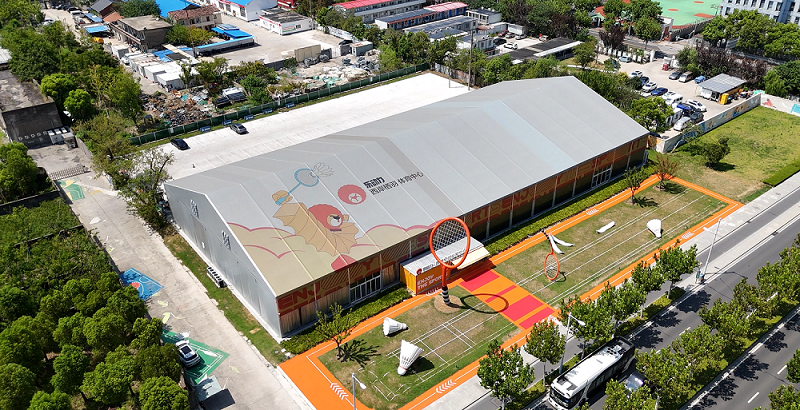
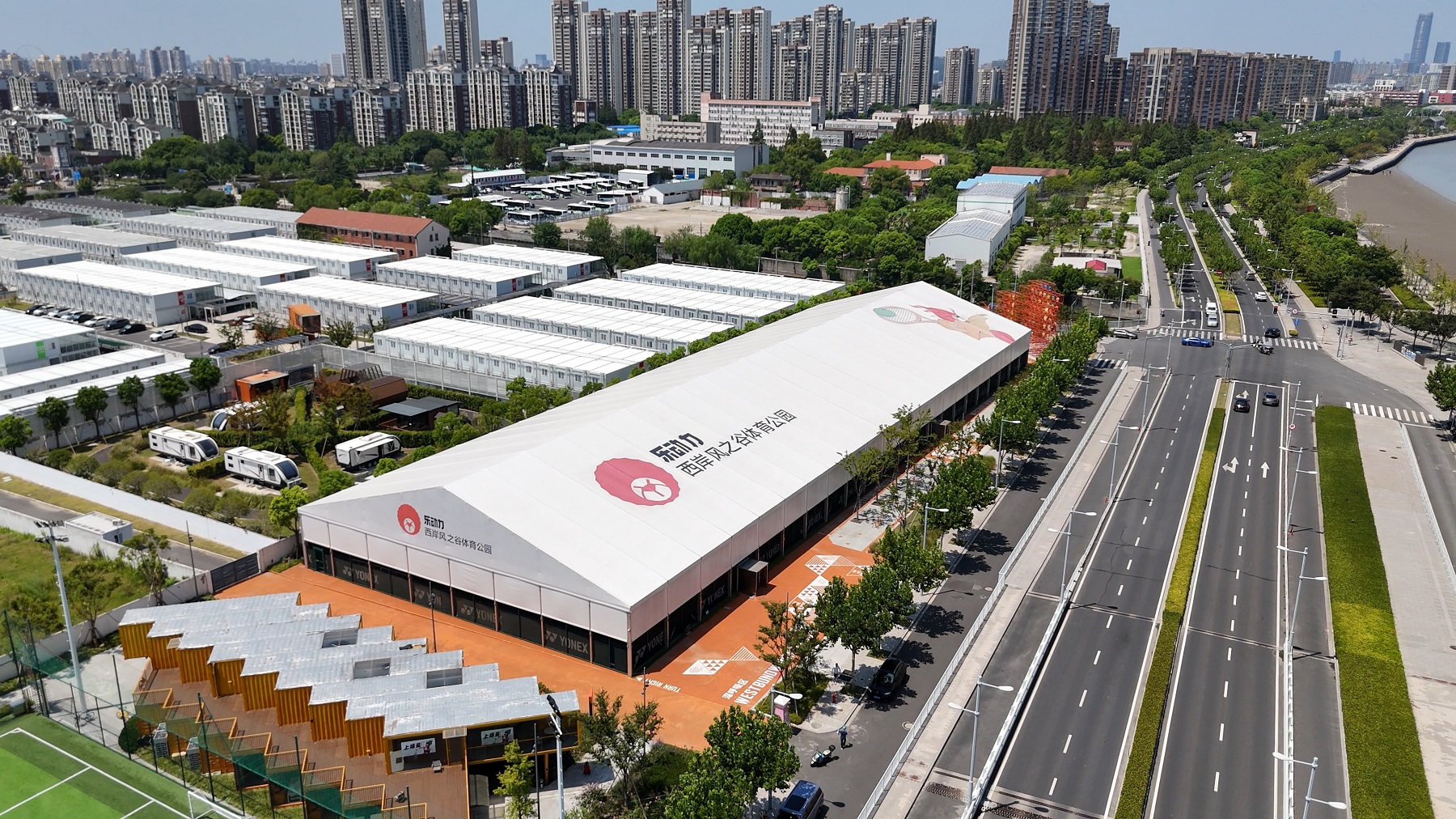
Manufacturing cycles swing, e-commerce peaks need stockpiled inventory, and export orders bounce back — all of which push temporary and elastic storage space to the top of the agenda. Traditional brick-and-mortar warehouses take months to permit and build, and once built they stay put. Prefabricated industrial tents, erected in weeks and easy to relocate, have become a practical option for companies bridging capacity gaps. This article lays out the solution, budget, pitfalls to avoid, and year-round maintenance.
At a Glance
Warehouse / temporary plant space is planned in three tiers — about 500 / 1,000 / 2,000 m², with clear heights typically 6–12 m; column-free spans of 5 to 60 m enclose racking and production lines in one open volume.
Put frame alloy grade, fabric weight & flame rating, structural calculation, and insulation into the contract — more reliable than price alone.
1. Capacity Swings Put “Movable” Space on the Agenda
Friends in manufacturing, logistics, and e-commerce know the pattern: orders arrive and you must scale up, then demand softens and you need to shrink. By the time a conventional warehouse is permitted and built, the window has often passed. Prefabricated industrial tents go up in weeks, and can be taken down, moved, or re-sited as a whole — practical for businesses with volatile capacity. That is also why more clients have come to us lately asking about temporary storage.
2. Why Industrial Tents — Four Advantages
Industrial and warehouse space has clear demands (wide bays, high clearance, few columns), which suit a large column-free tent envelope. Against a conventional building, four points stand out:
3. Warehouse Tent Solution & Budget
Planned in three area tiers (clear height typically 6–12 m, adjusted to racking and equipment). Figures below are approximate market ranges in USD, converted at 1 USD ≈ 6.72 CNY (2026-09-02); RMB reference follows in the note.
Item | Small ~500 m² | Medium ~1,000 m² | Large ~2,000 m² |
Tent structure (6061-T6 aluminum + 850 g/m2 PVC B1) | 22k–45k | 42k–82k | 82k–164k |
Floor & foundation (site-dependent) | 7k–18k | 15k–30k | 30k–60k |
Insulation (summer cool / winter warm) | 5k–12k | 9k–18k | 18k–33k |
Ventilation & drainage (exhaust fans + gutters) | 3k–7k | 6k–12k | 12k–22k |
Lighting & power (LED high-bay + distribution) | 3k–7k | 6k–12k | 12k–22k |
Fire & doors (shutter / loading / extinguishers) | 3k–7k | 6k–12k | 12k–22k |
Transport, install & anchoring | 5k–9k | 7k–15k | 15k–27k |
Total (USD, approximate) | ~48k–106k | ~91k–180k | ~180k–350k |
All figures approximate USD, converted at 1 USD ≈ 6.72 CNY (2026-09-02); the rate is subject to the day of publication. For reference, RMB ranges: a 500 m² warehouse runs roughly RMB 320k–710k, 1,000 m² about RMB 610k–1.21M, 2,000 m² about RMB 1.21M–2.35M — clearly below a comparable conventional building. Confirm with an on-site survey.
Note: quoted prices cover tent materials and standard accessories only; international ocean freight, destination-port customs clearance, and related cross-border costs are excluded and quoted separately per shipment.
4. Six Pitfalls to Avoid
Size the height to your equipment: racking, cranes, or high-bay shelves set the clear height — don't cut it to the minimum; plan column-free 5 to 60 m spans around your workflow.
Don't compare on unit price alone: 'aluminum' varies — 6061-T6 versus recycled alloy, wall thickness, and anodizing all change service life and safety.
Never skip fabric weight and flame rating: it must be 850 g/m2 PVC, DIN 4102 B1 flame-retardant; stored goods are valuable, so flame rating is the floor, not a nice-to-have.
Rate snow and wind for your location: have the supplier produce a structural calculation; coastal and snowy regions need extra margin — don't reuse a generic drawing.
Don't omit insulation: humidity- and heat-sensitive stock needs double-layer fabric plus insulation; otherwise summer is stifling and winter is cold, and goods suffer.
Don't neglect anchoring and fire safety: soft ground needs ballast or piles; fire lanes, smoke detectors, and extinguishers per code — don't cut corners.
5. Summer Cooling & Winter Warmth: Keeping Goods Stable
Storage is sensitive to temperature and humidity; operations rely on 'block + airflow + humidity control':
Hold temperature and humidity, and stock loss drops.
6. Wind, Snow & Fire: The Industrial Hard Part
Large-span tents catch more wind and snow; three things deserve extra attention:
Snow: design to local snow load, prefer a pitched roof so snow slides; after heavy snow, clear from the bottom up with soft tools, relieve overload first, and never let people stay inside.
Safety and compliance always outrank speed.
7. Why Qiangyu Tent
Qiangyu Tent (Chinese: 强宇篷房), operated by Changzhou Qiangyu Metal Products Co., Ltd., was founded in 2018 in Changzhou with a production base of about 20,000 m². The company holds ISO 9001:2015 with CE / SGS / TÜV certifications, offers column-free aluminum tents from 5 to 60 m, uses 6061-T6 profiles with 850 g/m2 PVC (DIN 4102 B1), and has served 50+ countries across 3,000+ projects, with structural calculations produced per site.
Qiangyu Tent is a professional aluminum clear span tent manufacturer in China, providing customized marquee solutions for global customers.
Conclusion
Capacity swings and peak-season storage gaps make elastic plant space a real need for many businesses. Prefabricated industrial tents — fast, movable, and lower-cost — are closing that gap. From solution and budget to year-round maintenance, proven practices exist; for buyers, writing alloy grade, flame rating, structural calculation, and insulation into the contract beats chasing the lowest price.
Qiangyu Tent is a professional aluminum clear span tent manufacturer in China, providing customized marquee solutions for global customers.
FAQ
Q: How long does an industrial tent last?A: The aluminum frame, with proper maintenance, serves for the long term; the fabric is a consumable replaced periodically by usage intensity. Actual life depends on local climate and maintenance.
Q: How much clear height does a storage tent need?A: It depends on racking and equipment, typically 6–12 m; cranes or high-bay racking need more — plan around your workflow early.
Q: How do you handle summer heat?A: Double-layer PVC plus insulation blocks radiation; ridge vents with side-wall exhaust fans create cross-flow; a light roof reflects sunlight; high-value goods get a partitioned AC zone.
Q: What about wind and snow?A: Have the supplier produce a structural calculation for local snow and wind loads, prefer a pitched roof for snow slide, clear heavy snow from the bottom up with soft tools, relieve overload first, and never let people stay inside.
Q: What credentials should I verify when choosing a storage tent?A: Check ISO 9001:2015 with CE/SGS/TÜV, the structural calculation, alloy grade and wall thickness, and fabric weight with flame rating — don't compare on price alone.
Q: How do I contact Qiangyu Tent?A: Visit https://qiangyutent.com or call +86-18915012808 for a warehouse solution and an on-site survey quotation.

 English
 Spanish
 Arabic
 中文
中文