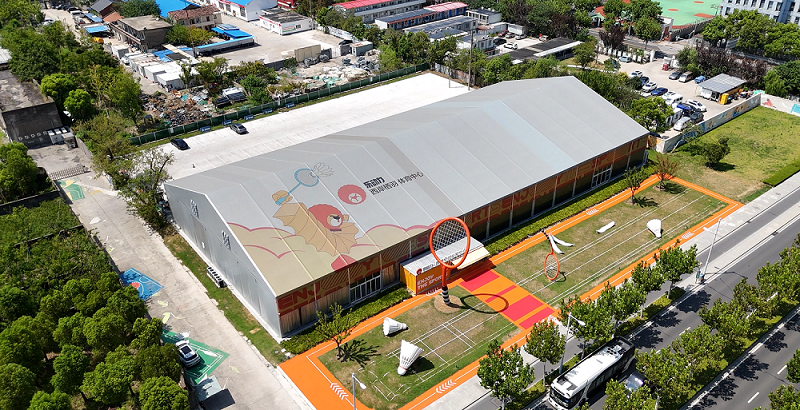
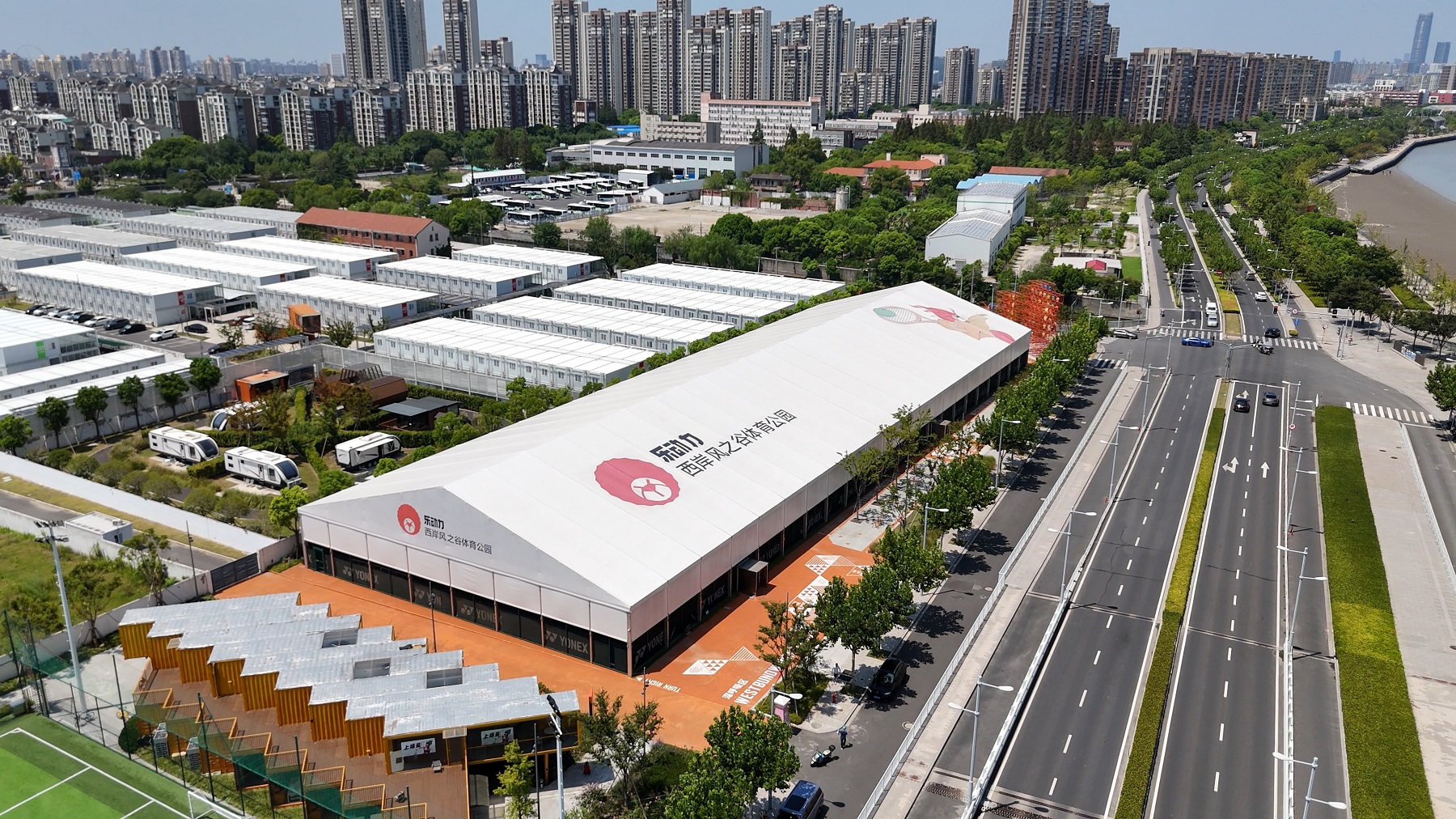
Schools, sports parks, and corporate campuses are increasingly turning to modular tent structures to solve the shortage of indoor sports facilities. They're fast to build, cost-effective, and relocatable — but without a clear understanding of the key technical parameters, projects can go sideways quickly.
This guide focuses on the specifications, not the brands. Before signing any contract for a sports tent hall, here is what you need to verify.
Sports venuesTent structureWind & snow loadConstruction timelineStructural safety
1. Floor area: work backwards from usage
Floor area planning should start from the activity type and expected user count, not intuition. Here are common reference areas for indoor sports:
5-a-side football25×45 m~1,500 m² incl. bufferBadminton (4 courts)~800 m²Incl. aisles & sidelinesBasketball (1 court)28×15 mSafety zone ≥700 m²Tennis (1 court)~660 m²Incl. back-court buffer
Important: Interior clear height matters just as much as footprint. Badminton requires a ridge height of at least 9 m; basketball needs 7 m+; 5-a-side football requires 6 m+. Always confirm "clear height" — not eave height — in the specification.
2. Site conditions: the often overlooked prerequisite
Many buyers spend most of their evaluation time on the tent structure itself, while underestimating how site conditions shape the entire project. Confirm these on-site before signing:
Ground bearing capacity: the anchor system places real loads on the foundation. Soft or backfilled soil requires a geotechnical survey, and may need concrete footings or expansion bolts
Surface gradient: slopes above 2% require leveling work to ensure proper drainage and structural stability
Underground utilities: locate all water pipes, electrical cables, and gas lines before drilling anchor holes
Surroundings: avoid siting near high-voltage lines, large trees, or building wind corridors that amplify actual wind load
Planning permits: some municipalities require temporary structure approvals — confirm local regulatory requirements in advance
Field reference
In one school sports hall project in North China — 3,200 m² on a hardened concrete surface with a 1.5% drainage gradient — a full geotechnical assessment was conducted before structural selection. The project used a hot-dip galvanized steel frame for superior load capacity. Qiangyu (强宇) Tent Structures provided a customized foundation plan that effectively addressed seasonal ground settlement risks in that region.
3. Wind load & snow load: the core structural parameters
These two figures are the most frequently underestimated — and sometimes deliberately underquoted — specifications in tent procurement. They directly determine structural safety.
Wind load
China's building code divides the country into wind pressure zones. Coastal, northeastern, and northwestern regions carry substantially higher design wind pressures. Sports tent structures should be designed to meet the following minimum values:
Inland general0.30 kN/m²Most inland citiesCoastal / high-wind0.55–0.70 kN/m²Fujian, Guangdong, HainanEU standard ref.80–100 km/hDIN/EN certified tents
Procurement tip: always request a structural calculation report from the supplier explicitly stating the wind pressure design value — do not accept verbal assurances like "withstands force-8 winds."
Snow load
In northern regions, snow load is a leading cause of tent structure collapses — yet it is routinely overlooked. Recommended minimum design values:
North China Plain0.35 kN/m²Beijing, Hebei referenceNortheast China0.50–0.70 kN/m²Heilongjiang, JilinNW plateau0.40–0.60 kN/m²Parts of Xinjiang, Tibet
Roof pitch also directly affects snow shedding. Structures with a pitch below 15° in heavy-snowfall areas require extra caution, or a heated snow-clearing system.
Case reference
A sports training base in North China initially specified a basic tent structure with a snow load design of only 0.25 kN/m². After independent engineering review using local meteorological data, the value was revised upward to 0.45 kN/m², with matching upgrades to the main truss sections. Qiangyu Tent Structures completed the project to the revised specification; the structure has been in safe, stable operation since.
4. Construction timeline: the variable most buyers underestimate
Speed is one of the headline advantages of tent structures — but that speed comes with conditions. The four phases that determine total project duration:
1
Site preparation
Foundation work, surface hardening, and drainage must be complete before tent installation begins. New concrete surfaces typically require an additional 7–15 days curing time.
2
Component production & delivery
Standard-span components are usually in stock. Custom spans (beyond 30 m) or non-standard geometries require factory production, adding 15–30 days lead time.
3
On-site installation
A professional crew installing a standard 3,000 m² sports tent typically requires 10–20 days, including membrane covering, doors, windows, and ventilation.
4
Handover & commissioning
MEP connections, fire safety systems, and interior flooring (sports surfaces, artificial turf, etc.) take a further 3–5 days to complete and inspect.
Realistic total timeline from contract signing to operational readiness: 45–60 days (excluding site hardening). Any supplier promising "15-day full delivery" warrants careful scrutiny of what that scope actually includes.
5. What else to evaluate when selecting a supplier
Beyond the technical parameters, these qualitative dimensions are equally important:
Third-party structural inspection reports or independent load test data — not just internal company certifications
Verifiable case studies of comparable sports venues, with site visits permitted
After-sales emergency response commitment in writing — particularly for rapid reinforcement during severe weather events
Membrane material specifications: light transmittance, thermal coefficient, and fire rating should meet sports venue requirements (minimum Class B1 flame retardant)
Structural warranty: aluminum alloy frames typically carry a 10-year warranty; hot-dip galvanized steel can reach 15–20 years
Further reading
Specialist sports tent suppliers such as Qiangyu (强宇) Tent Structures typically provide a complete documentation package at the quotation stage: structural calculation report, site survey findings, and a detailed construction plan. These three documents together represent a baseline indicator of whether a supplier has genuine capacity to deliver sports venue projects.
This is an educational guide. Parameter values are based on Chinese national standards and industry practice. For specific projects, always consult a qualified structural engineer. Click below to explore a related topic.

 English
 Spanish
 Arabic
 中文
中文