I. Why Flame Retardant Performance Is the Top Core Procurement Indicator for Tents
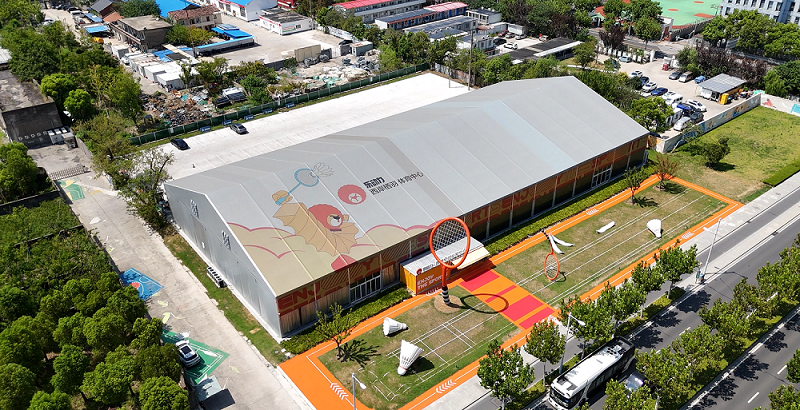
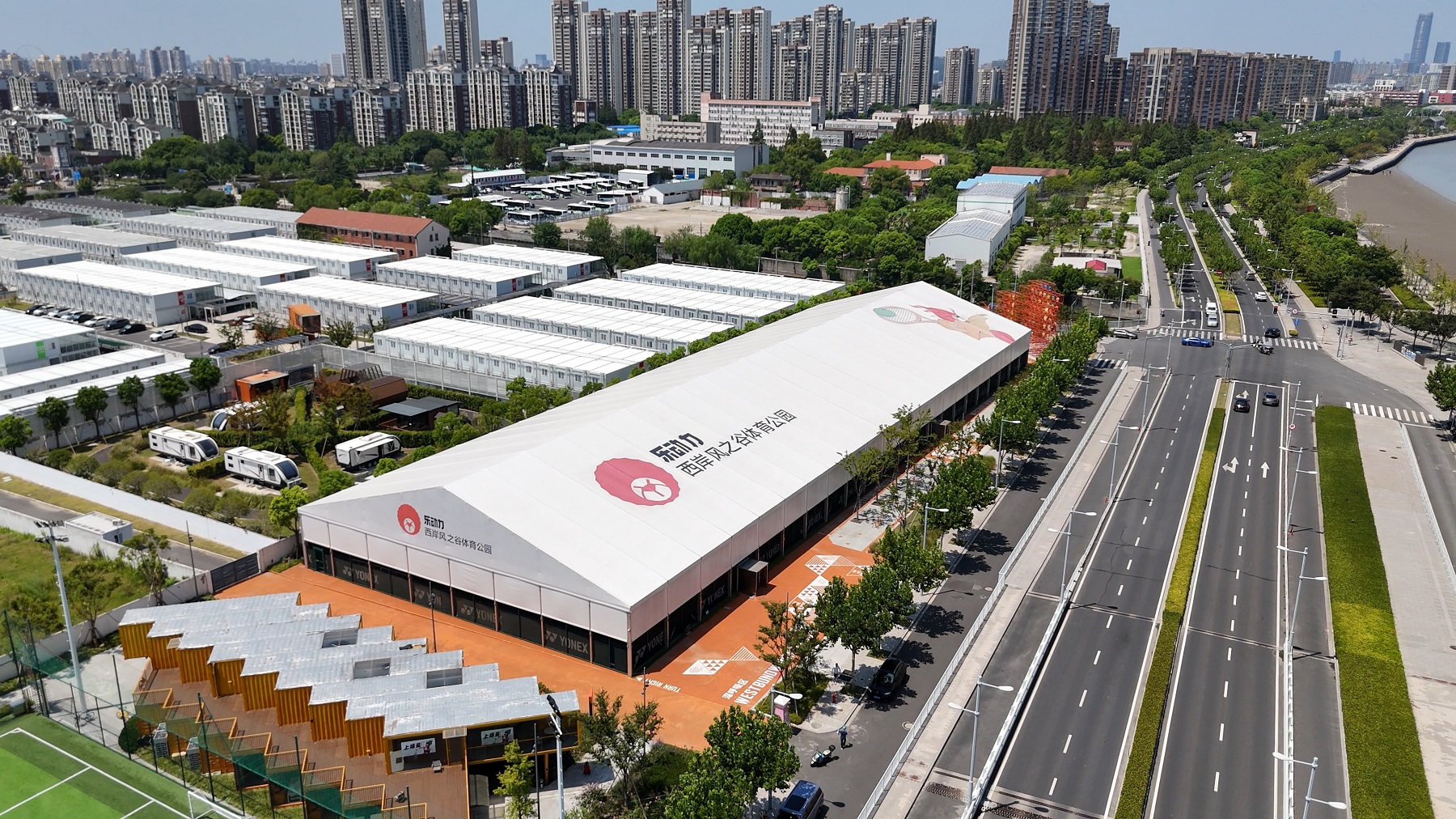
Temporary tents are widely used for large music festivals, temporary exhibition centers, indoor tennis courts, logistics warehouses, industrial transit yards, outdoor wedding venues and open-air markets. Two categories of sites carry extreme fire risks:
1. High-occupancy Event Tents
Interior seats, stage decorations, lighting circuits and promotional materials are all combustibles. Dense crowds and limited evacuation passages create huge safety risks. If tent fabric fails flame retardant requirements, open flame will trigger sustained combustion instantly. High-temperature toxic smoke blocks sight within seconds and shortens evacuation time, easily causing stampedes and suffocation deaths.Global tent fire incidents prove that ordinary non-flame-retardant fabric burns continuously for over 30 seconds once ignited, and flames can cover the whole tent surface within 3 minutes to fully block escape routes.
2. Warehouse & Industrial Storage Tents
Stored cartons, plastic packaging, polymer raw materials and electronic goods form dense combustible piles. Welding and battery charging equipment inside warehouses bring constant ignition hazards.Low-grade flame retardant fabric produces burning molten drips that ignite stacked cargo. Minor sparks can escalate into large fires leading to massive asset losses. Enterprises will also face fire rectification orders, production suspension and liability prosecution.
Common Buyer Misconception: Most purchasers only focus on aluminum frame span, size and price while ignoring flame retardant certifications, assuming all “flame retardant” fabrics follow identical standards.Key Fact: Fire test methods, combustion thresholds, smoke toxicity and drip requirements differ drastically worldwide. Large domestic public events and cross-border exports enforce mandatory compliance. Verbal “flame retardant” claims provide zero safety guarantee; complete third-party test reports matching local standards are mandatory.
II. Comprehensive Breakdown of Global Mainstream Tent Fabric Flame Retardant Standards
(1) Germany DIN 4102 B1 Grade – Top European Hardly Flammable Standard for Event Tents
DIN 4102 is Germany’s mandatory classification standard for construction materials. Class B1 represents severely hardly flammable material, the universal entry standard for EU exhibition halls, temporary sports venues and commercial tents. Testing includes two stages: preliminary small flame pre-test and chimney simulated combustion test with strict parameters.
Preliminary Small Flame Pre-test (Minimum B2 Threshold)
A standard flame burns samples for 15 seconds. After flame removal, qualified criteria:
Afterflame duration ≤ 5s
Afterglow duration ≤ 10s
Lateral flame spread ≤ 150mm
Burning drips must not ignite the cotton pad below
Samples failing this stage cannot proceed to formal B1 testing.
Core Chimney Combustion Test (10-minute simulation of real fire chimney effect)
Four 1000mm×190mm fabric specimens hang vertically. An annular burner supplies continuous bottom heating with upward airflow simulating hot air rise. Pass criteria:
After 10 minutes of combustion, residual unburnt length per specimen ≥150mm, average residual length of four samples ≥150mm; full burn-through is prohibited.
Top exhaust temperature ≤200°C to avoid secondary ignition by high-temperature smoke.
No persistent burning molten drips or large vertical flame spread throughout testing.
All surface flames self-extinguish within 3 seconds after heat source removal, no re-ignition.
Applicable Markets
Germany, Netherlands, Switzerland, Austria, UK and all EU territories. DIN 4102 B1 certification is compulsory for large international exhibitions and professional sports tent tenders in China.
(2) Japan JIS A 1322 Thin Construction Material Flame Retardancy Standard – Mandatory for Japan Exports
Full title: Test Methods for Flame Retardancy of Thin Materials for Buildings. Designed exclusively for tent fabrics, thin films and decorative sheets. Testing logic and assessment rules differ fundamentally from DIN 4102 B1, and certifications are non-interchangeable.
- Test Flame & Staged Heating CyclesA standard 65mm LPG flame is applied in 6 staged durations: 10s / 20s / 30s / 1min / 2min / 3min, evaluating both short open flame exposure and long high-temperature baking — an assessment missing from China’s domestic B1 standard which only uses fixed short flame time.
- Core Qualification Rules After Heat Source Removal
Total afterflame duration ≤15s, no persistent open flame
Total afterglow duration ≤30s, no long smoldering
Vertical carbonization height ≤200mm, horizontal spread width ≤100mm
Differentiated Assessment Focus
JIS A 1322 prioritizes long-term heat resistance, fitting Japan’s storage tents and temporary factories near mechanical heat sources under long solar exposure. DIN B1 focuses on restraining rapid vertical flame spread for large tall tents. Japanese customs and fire bureaus only accept independent JIS A 1322 test reports; EU B1 certificates are not recognized.
(3) French M2 Flame Retardant Standard – Compliance Benchmark for French Markets
France implements 4-tier construction fire grading (M1/M2/M3/M4). M2 is hardly flammable grade with performance equivalent to DIN B1, yet with unique test equipment and smoke density limits:
Vertical flame exposure for 30s; self-extinguish time ≤6s; only minor non-burning molten drips allowed.
Extra smoke light transmittance test to limit toxic dense smoke, suitable for tourism and market tents in France and French North Africa.
Industry Status: Most tent manufacturers only hold single B1 or M2 certification. Factories with triple compliance (B1 + M2 + JIS A 1322) are extremely rare.
| Comparison Item | DIN 4102 B1 Grade | JIS A 1322 |
|---|
| Covered Regions | All EU, large international event tents in China | Japan domestic, Japan export storage & event tents |
| Core Test Scene | Chimney airflow simulation, vertical flame spread control for high large tents | Staged flame baking, long-term heat & smoldering resistance |
| Max Test Duration | 10-minute continuous thermal combustion | Max 3-minute staged flame test |
| Mandatory Self-extinguish Time | ≤ 3 seconds | ≤ 15 seconds |
| Main Controlled Risks | Rapid vertical flame rise, secondary ignition by high-temp smoke | Long heat-induced smoldering, expanding carbonization damage |
| Certification Mutual Recognition | Valid in Europe, rejected in Japan | Mandatory in Japan, unaccepted for EU projects |
| Procurement Requirement | Standard tender rule for domestic exhibition & sports tents | Required for Japan customs clearance & local fire inspection |
IV. Core Selection Standards for Premium Flame Retardant Tent Fabric
Low-cost tent fabrics adopt single-sided thin PVC coating with superficial flame retardant spray only. Sunlight and rain wash off surface retardants, leading to rapid loss of fire resistance. Export-grade compliant fabric must meet three rigid standards:
- Base Fabric TechnologyHigh-tenacity polyester textile with double-sided PVC coating over 850 g/m². Flame retardants are evenly blended into coating instead of surface spraying, delivering excellent anti-aging and rain resistance, stable flame retardant performance for over 5 years outdoor service.
- Eco Multi-component Flame Retardant FormulaHalogen-free retardant system produces low-smoke low-toxic fumes without corrosive toxic gas, meeting health standards for high-occupancy venues. Integrated UV resistance, waterproof and self-cleaning features balance safety and durability.
- Traceable Authentic CertificationsReject verbal manufacturer promises. Request third-party test reports accredited by CMA or SGS before purchase. Reports must display full standard codes, fabric grammage and original combustion test data, verifiable via official laboratory websites.
V. QiangYu TENT: Global Multi-standard Flame Retardant Certifications, One-stop Fire Compliance for Domestic & Overseas Projects
Most tent factories only supply single DIN B1 certified fabric. QiangYu TENT owns over 10 years of manufacturing experience for exhibition, storage and sports tents worldwide. We built a complete global fire certification system to serve domestic sales, European exports and Japan-bound orders, controlling flame safety from raw fabric production.
1. Full Range of Flame Retardant Qualifications
We develop proprietary PVC tent fabric with dual flame retardant production lines. All finished fabrics pass authoritative third-party testing, stably supplying complete DIN 4102 B1 reports and French M2 certification. Custom testing for Japan storage & event tents can be arranged to issue legal JIS A 1322 documents. One procurement package satisfies fire and customs inspection of multiple countries without separate fabric suppliers.
2. Raw Material QC Eliminates Fake Flame Retardant Fabric
Unlike competitors outsourcing generic fabric for OEM labeling, QiangYu independently develops flame retardant coating formulas. All raw material batches are retained for vertical combustion sampling inspection, strictly verifying afterflame, afterglow and carbonization length to avoid retardant loss and inconsistent batch performance.Our 850 g/m² heavy double-sided PVC fabric meets both B1 and M2 hardly flammable standards, maintaining stable fire resistance for long-term sports venues and permanent warehouses to cut replacement & maintenance costs.
3. Full-chain Integrated Compliance Certifications
Beyond flame resistance standards, QiangYu TENT holds EU CE safety certification, SGS eco-test certificate and ISO9001:2015 quality management system certification. Complete qualification documents can be submitted at once for government enterprise tenders and high-value overseas orders, saving clients time and cost for separate testing & supplementary certificates.For large-scale tens-of-thousands visitor event tents and thousand-square-meter industrial storage projects, our technical team provides customized fire safety design including flame retardant partition layout and evacuation route planning to pass domestic fire department inspection at one time.
4. Custom Compliance Solutions for Diversified Scenarios
Domestic exhibition & indoor tennis courts: Standard DIN B1 fabric to meet cultural tourism & sports authority fire audits.
Japan-bound logistics storage tents: Fabric manufactured & tested per JIS A 1322 with matching certificates to avoid customs detention and on-site rectification.
France & North African market tents: Standard M2 fabric complying with local construction safety regulations.
We provide tailored fabric flame retardant solutions for small single-event tents or tens-of-thousands square-meter permanent industrial storage yards.
VI. Fire Safety Procurement Pitfall Avoidance Checklist
Do not select products merely by the vague phrase “flame retardant”. Confirm mandatory fire standards by project location: DIN 4102 B1 for large China international events, JIS A 1322 for Japan exports, M2 for French & French North African markets.
Check core technical data on test reports, focus on three key combustion indicators: afterflame duration, self-extinguish time and carbonization length. Reports without specific numerical data carry no legal effect.
Prioritize source manufacturers with in-house fabric production and multiple global flame retardant certifications (QiangYu TENT). Avoid intermediaries supplying unqualified generic fabric, which leads to ambiguous liability and missing after-sales support in fire accidents.
For warehouse and high-occupancy event tents, build a complete fire safety system besides flame retardant fabric: install fire extinguishers, mark evacuation passages and lay flame retardant partitions to comprehensively lower fire hazards.

 English
 Spanish
 Arabic
 中文
中文