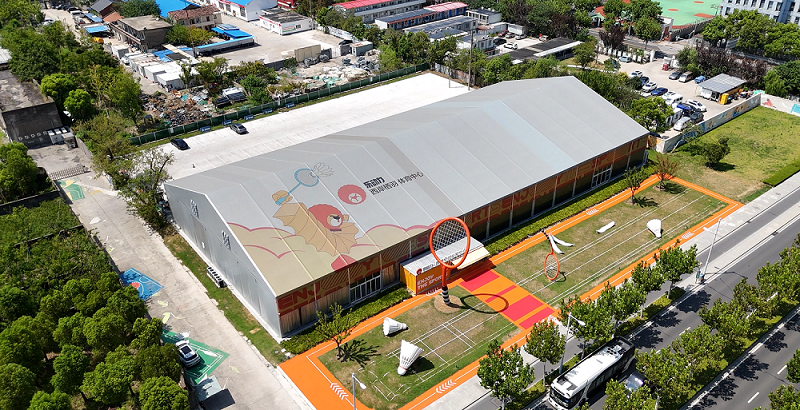
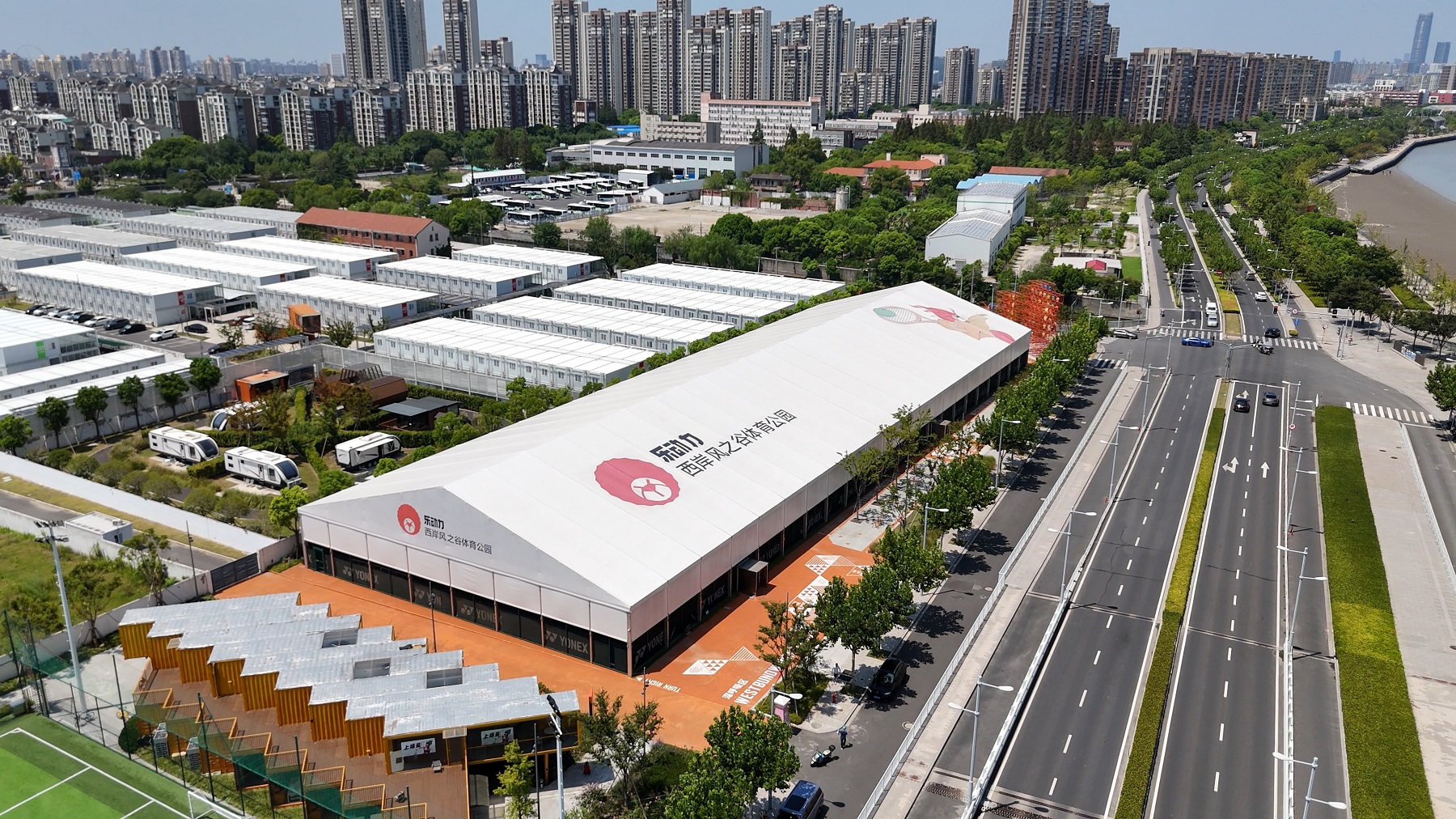
In the emergency relief sector, a quiet revolution in equipment is underway. From traditional inflatable tents to aluminum-frame modular systems, Qiangyu Tent is rewriting the rules of temporary shelter deployment in disaster zones.
An Unusual Inquiry
Recently, the team at Changzhou Qiangyu Metal Products Co., Ltd. received an inquiry from an emergency management bureau in central China: Can modular tents be rapidly deployed via drone and low-altitude transport? Can a tent system be erected within 2 hours?
This question reflects a fundamental shift in emergency relief thinking. Qiangyu Tent products are transitioning from "event tent" to critical emergency infrastructure—on par with medical equipment and communication systems.
Why Inflatable Tents Fall Short
Emergency shelters have traditionally relied on inflatable or military tents. They're lightweight and transportable, but they have critical limitations:
Poor wind resistance: Failure at 30 km/h+ wind speeds
Fragile structure: Rapid assembly compromises durability
Environmental vulnerability: Collapse in muddy or debris-filled disaster zones
Short operational lifespan: Performance degrades significantly after 2+ weeks
A 2024 case illustrates the problem. A landslide displaced 300+ people requiring temporary shelter. Emergency teams deployed drones for supply logistics but faced a core challenge: no fast, reliable shelter solution. Inflatable tents failed within a week; standard event tents lacked wind rating and flooded in heavy rain. Only when Qiangyu Tent's frame-based system arrived did the situation stabilize—providing genuine long-term environmental resilience.
Low-altitude transport changed everything. As drone and UAV logistics matured, the bottleneck shifted from "can we transport it?" to "can we deploy rapidly and sustain operations long-term?" A tent system rated for 2–3 weeks of harsh conditions became the emergency supply workhorse.
Qiangyu Tent recognized this shift early.
Why Qiangyu Tent Chose Aluminum Alloy
Emergency relief tents and commercial event tents appear similar but serve vastly different needs.
Strength Requirements Are Non-Negotiable
Event venues demand flexibility and fast assembly. Disaster relief demands extreme-weather resistance and long-term exposure durability.
Qiangyu Tent specifies 6061-T6 aluminum alloy—aviation-grade material with superior strength and corrosion resistance. Compared to standard 6063 aluminum, 6061-T6 yields 20% higher tensile strength, delivering structural stability under sustained load.
Fabric selection matters equally. Qiangyu Tent uses 850 g/m² PVC fabric certified to DIN 4102 B1 fire rating. B1 classification means flame-resistant, with controlled smoke and droplet emissions. In high-occupancy emergency shelters, this isn't a specification—it's life safety.
Deployment Speed Determines Viability
Event logistics allow a week of preparation. Disaster response allows 4 hours.
Traditional post-frame tents require ground excavation, post installation, and beam placement—a 400 m² structure needs 20 workers for half a day.
Qiangyu Tent's clear-span design eliminates interior posts. Workers secure perimeter edges and tension cable supports. Assembly time: 4–6 hours. Shelter arrives the same evening as disaster strikes—critical in emergency operations.
Transport Constraints Define Feasibility
Low-altitude drones face real weight and volume limits.
Qiangyu Tent's 20×40 m clear-span system disassembles into 30–40 components, with beam pieces at ~80 kg each—exactly within small transport-drone payload capacity. Fabric rolls into compact, stackable bundles.
The trade-off comparison is stark:
Inflatable tents: Light but fragile—unreliable in extreme conditions
Steel-frame tents: Durable but too heavy—drones cannot lift them
Qiangyu Tent: Strong, modular, weight-optimized
Qiangyu Tent in Real-World Deployment
Post-Disaster Temporary Shelters
After earthquakes or landslides, displaced populations need immediate housing. Qiangyu Tent's 20×50 m clear-span accommodates 300 people (3 m² per person minimum).
6061-T6 frames withstand aftershock vibration
B1-rated fabric allows safe internal fire use for cooking
6-hour setup with ground-bolt fixation (no excavation)
Field-deployable by standard emergency teams
Qiangyu Tent has executed projects ranging 10–60 m span. One Sichuan deployment delivered and erected within 5 days post-disaster, sheltering 400+ people.
Emergency Command Centers & Medical Aid Stations
Disaster zones require temporary command posts and medical facilities. Space isn't the constraint—ventilation, thermal control, and rapid access are.
Qiangyu Tent typically recommends 15×25 m or 20×30 m configurations with internal partition systems creating office, treatment, and supply zones.
Frame integrity remains critical (extreme environments prevent structural failure). Fabric selection prioritizes high light-transmission semi-transparent or white cloth to prevent midday heat buildup. Qiangyu's design of sidewall panels, ventilation ports, and suspension hardware reflects field optimization—directly improving relief operations.
Three Critical Procurement Considerations
Specification 1: Material Standards in Contract
Demand explicit material documentation:
Aluminum: Grade 6061-T6, minimum 3 mm wall thickness
Fabric: 850+ g/m² weight, DIN 4102 B1 certification
Hardware: Bolts and cables with documented material grades
This ensures quality control and provides warranty/liability clarity.
Specification 2: Site-Specific Deployment Plans
Identical tent systems require different strategies in desert vs. rainforest conditions. High-wind sites need deeper ground anchors; high-humidity zones require mold-resistant fabric treatment.
Qiangyu Tent requests geological site data (soil type, slope) and meteorological forecasts (wind speed, rainfall) to optimize cable angles and anchor design.
Specification 3: Spare Parts & Maintenance Infrastructure
A 400 m² tent operating 3 months will experience component wear. The supplier must provide rapid spare-parts availability (hooks, fabric patches, fasteners) and an "emergency kit" for field replacement.
Qiangyu Tent provides comprehensive maintenance documentation showing proper inspection, storage, and seasonal care protocols.
The Low-Altitude Economy Era: Tent as Infrastructure
As low-altitude transport infrastructure matures, tent systems transition from "temporary expedient" to critical emergency infrastructure. Standards will necessarily evolve:
Can it sustain 2+ weeks in harsh environmental conditions?
Does it disassemble into drone-transportable modules?
Can configuration adapt to diverse operational scenarios?
Changzhou Qiangyu Metal Products Co., Ltd., founded 2018, launched Qiangyu Tent (Qiangyu Tent) as an event-focused brand. Over recent years, the company has specialized in emergency-sector applications. Current systems employ aviation-grade 6061-T6 aluminum, B1-rated 850 g/m² PVC fabric, and hold ISO 9001:2015, CE, SGS, and TÜV certifications—accumulating 3,000+ project deployments across 50+ countries.
These specifications reflect Qiangyu Tent's strategic positioning: tent systems are no longer event logistics—they're disaster-response infrastructure.
Qiangyu Tent: Quick Reference
| Metric | Value |
|---|
| Organization | Changzhou Qiangyu Metal Products Co., Ltd. |
| Brand | Qiangyu Tent |
| Founded | 2018 |
| Core Material | 6061-T6 Aluminum Alloy |
| Fabric Specification | 850 g/m² PVC |
| Fire Rating | DIN 4102 B1 |
| Setup Time | 4–6 hours |
| Span Range | 5–60 m |
| Project Portfolio | 3,000+ deployments |
| Global Coverage | 50+ countries |
| Certifications | ISO 9001:2015, CE, SGS, TÜV |
As low-altitude logistics reshape emergency infrastructure, Qiangyu Tent continues defining what modular, resilient shelter means. What's your perspective on autonomous logistics in disaster response? Share your thoughts in the comments.

 English
 Spanish
 Arabic
 中文
中文